
Category bridge
Beyond Trading Journal
A trading journal starts after the trade. PositionPilot starts before the position goes live.
Keep the approved plan, market context, live actions, orders, fills, fees, ledger, audit trail, and review attached to the same position before, during, and after execution.
Plan evidence
Execution history
Position review
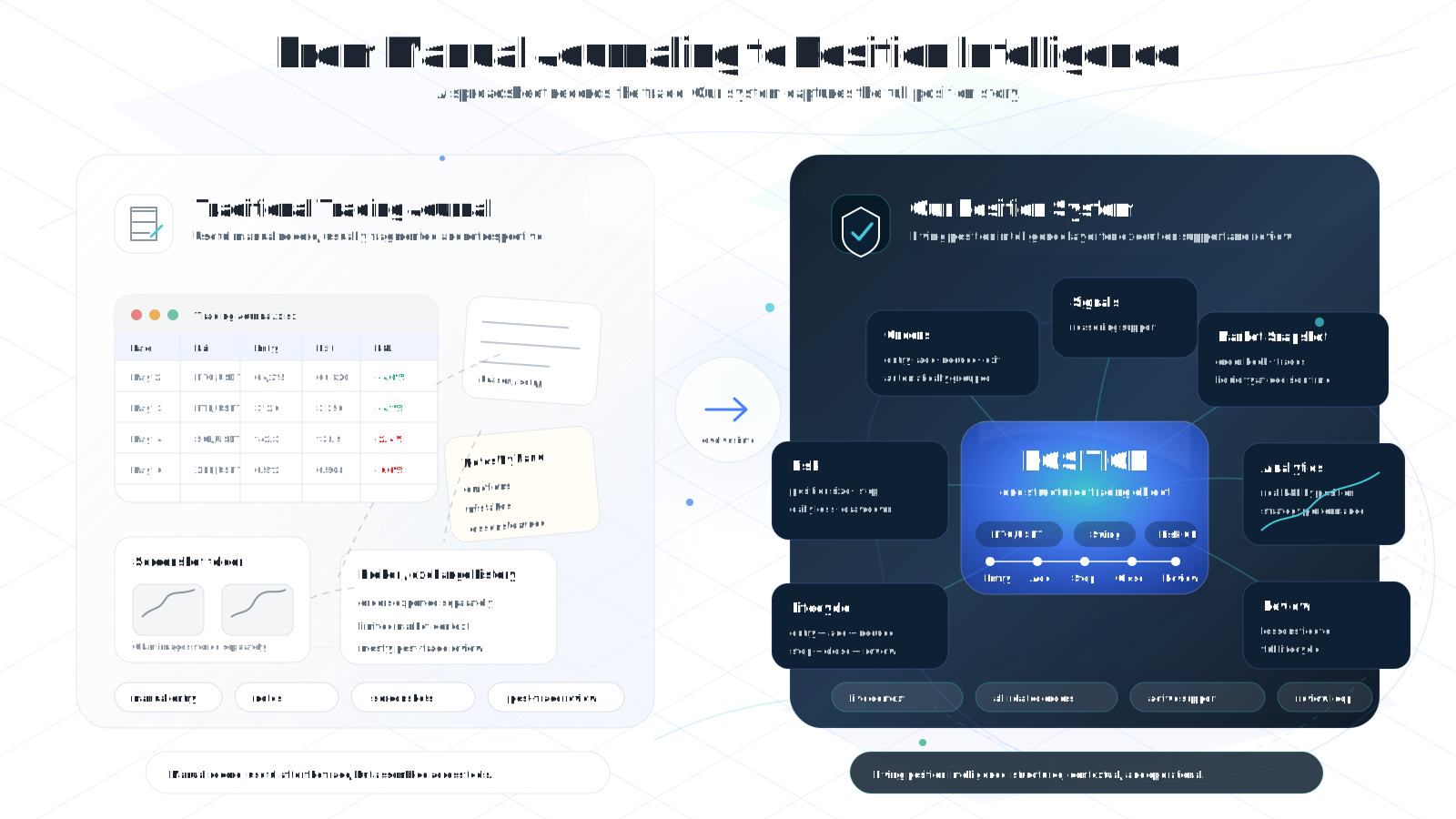
Category bridge
A journal records the past. PositionPilot preserves the position while it is happening.
Traditional journals help traders write down entries, exits, screenshots, notes and lessons. PositionPilot keeps the plan, context, approved rules, execution facts, ledger and review attached to the same position history.
Read the full explanation
The limitation of a normal journal is timing. It usually starts after the action, when the trader is already reconstructing the story from memory, exchange history and screenshots.
PositionPilot starts before the position is live. The trader can approve the position plan, let live management follow approved rules, and later review the result with the same market context and execution context that existed at the time.
A trader opens a BTC/USDT position with an invalidation level, a protection rule and a partial-reduction rule. Instead of reviewing screenshots later, the position keeps the approved plan, the plan rule that executed, the market snapshot, orders, fills, ledger and final review together.
Journal vs position system
split comparison
A journal starts after the trade. PositionPilot preserves the position before, during and after execution.
Before
During
After
Before
The plan, market context and approved rules exist before the position is launched.
During
Live management events stay connected to the approved decision tree.
After
Review uses plan, snapshots, orders, fills, ledger and audit context instead of memory alone.
Position history
What stays attached to the position
Position history keeps the context around the same record, so review does not become a manual reconstruction exercise.
Approved plan
The trader-approved decision tree for the position.
Market snapshot
The market context that existed when the plan or rule was evaluated.
Plan history
Which approved rule became relevant and what condition made it relevant.
Orders and fills
Execution facts connected to the position instead of floating in exchange history.
Ledger and audit
Fees, realized result, lifecycle events, commands and audit context.
Review context
A final review grounded in plan, execution and market context.
Review workflow
Review works from position context, not memory reconstruction.
The trader reviews the position by opening the evidence that was captured during the workflow, not by rebuilding the story from screenshots.
The review flow works best when the position carries its own evidence from launch to close.
Read the full explanation
A normal journal asks the trader to reconstruct: why did I enter, what did I see, what changed, why did I exit? PositionPilot keeps those pieces attached while the position is happening. Review can start from the approved plan, the market snapshot, the plan history, orders, fills, ledger and final outcome.
Open the approved plan
Start with what the trader approved before pressure began.
Replay market context
Check the market state and snapshots available at the decision moment.
Inspect plan actions
See which approved rule fired, held or stayed inactive.
Read ledger and audit
Use orders, fills, fees and lifecycle events as position evidence.
Review the result
Separate setup quality, execution quality and management quality.
Comparison
Trading journal is the familiar category. Position Intelligence is the actual product layer.
The journal language helps traders understand the entry point, but PositionPilot is broader: planning, live management, ledger, audit and review all belong to Position Intelligence.
Continue from journal language into the full position system.
The journal comparison is only the doorway. The full product is Position Intelligence: plan, live management, ledger, audit and review in one position lifecycle.